Pocket money · · Updated
How Much Pocket Money Does a College Student Need in India?
How much pocket money does a college student need in India? Calculate your monthly amount using a realistic expense table, hostel or PG examples, and a buffer.
By Weps Technology
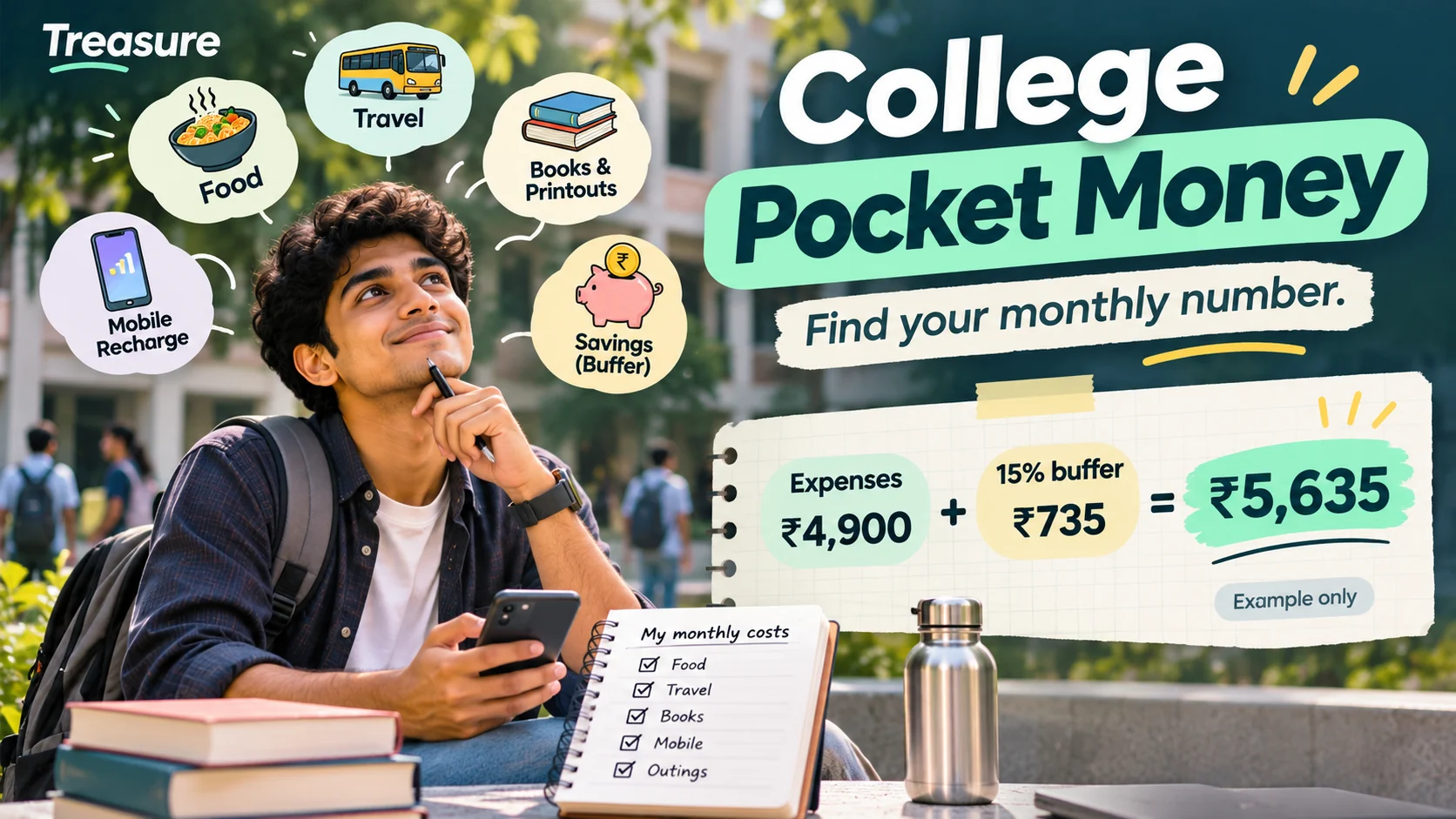
Quick answer: There is no fixed pocket money amount for every college student in India. A useful monthly target is the total of expenses you personally pay, plus a small buffer. If your monthly out-of-pocket costs are ₹4,900, adding an illustrative 15% buffer (₹735) gives ₹5,635—around ₹5,700 if you round up. This is an example calculation, not a national average or a recommendation for every city.
College life looks different depending on whether you live at home, stay in a hostel with a mess, or rent a PG and arrange your own meals. Your parents might pay tuition and rent directly, while you pay for transport, food outside, books and daily essentials. That is why copying a friend's pocket money figure often produces the wrong budget.
This guide shows you how to calculate how much pocket money a college student needs in India, how to discuss it with family, and how to track the amount without losing sight of UPI and cash spending.
How to calculate your monthly pocket money
Use this simple formula:
Monthly pocket money needed = your monthly out-of-pocket expenses + a flexible buffer.
Follow these steps:
- List costs you pay yourself. Include college canteen meals, local travel, printouts, mobile recharge, laundry, toiletries, outings and subscriptions if you actually cover them.
- Exclude expenses already paid directly by someone else. Do not count tuition, hostel fees, mess fees or rent if your parents or scholarship provider pay the institution or landlord directly.
- Add the monthly amounts. For spending that changes each week, use an estimate initially and replace it with recorded transactions after a month.
- Allow a buffer. An illustrative 10–20% can help with uneven expenses, but choose a level that fits your circumstances; it is not a statistical benchmark.
- Review after 30 days. Your own records are more useful than an online average.
Example: a student living in a hostel with mess fees paid separately
The figures below are hypothetical round numbers for explaining the calculation. They are not survey findings or typical prices in a particular Indian city.
| Expense you personally pay | Illustrative monthly amount |
|---|---|
| Food outside the mess | ₹2,000 |
| Local transport | ₹800 |
| Books, stationery and printouts | ₹300 |
| Mobile data or recharge | ₹300 |
| Laundry and toiletries | ₹500 |
| Outings and small shopping | ₹1,000 |
| Monthly expenses | ₹4,900 |
| 15% planning buffer | ₹735 |
| Calculated pocket money | ₹5,635 |
| Convenient rounded-up target | ₹5,700 |
A student who cooks might spend more on groceries and less on food outside. Someone who travels home frequently may need a separate travel fund. Change the numbers—not the method.
How much pocket money is enough if you live at home, in a hostel or in a PG?
Your living arrangement affects which costs come out of your own pocket. Here are three illustrative scenarios, not market averages or recommended allowances:
| Student situation | What you might personally pay for | Example out-of-pocket expenses | With a 15% illustrative buffer |
|---|---|---|---|
| Living at home | Commuting, canteen, printouts, mobile, personal purchases | ₹3,000 | ₹3,450 |
| Hostel; rent and mess paid directly | Food outside mess, travel, books, mobile, laundry, outings | ₹4,900 | ₹5,635 |
| PG; rent paid directly, meals self-managed | Groceries, local travel, college expenses, mobile, toiletries, outings | ₹6,500 | ₹7,475 |
Important: If you personally pay PG rent, hostel fees or the mess bill from your allowance, add them into your calculation. If your parents pay those bills directly, do not count them a second time. Tuition and semester fees should generally be planned as separate larger costs unless you personally pay them from the same monthly amount.
Is ₹5,000 per month enough for a college student?
Sometimes—but not automatically. It may work when tuition, accommodation and most meals are covered separately. It may not work when you pay for groceries, a longer commute, regular travel home or unexpected academic supplies. A specific number is meaningful only after you define what it needs to cover.
Fixed, flexible and occasional expenses: treat them differently
Separating costs helps you ask for a realistic amount without making every expense seem essential.
- Essential repeat costs: commuting, required college supplies, toiletries and meals you must arrange.
- Flexible costs: food delivery, cafés, entertainment, additional shopping and unused subscriptions.
- Occasional costs: a trip home, exam forms, course materials, a replacement charger or a medical expense.
Where practical, set aside occasional expenses separately rather than trying to squeeze every large payment into one ordinary month. If your family is already covering emergency expenses directly, agree on that arrangement instead of counting the same provision twice.
How to track pocket money and UPI spending for one month
A budget is only a starting estimate. The next step is to record what actually happens.
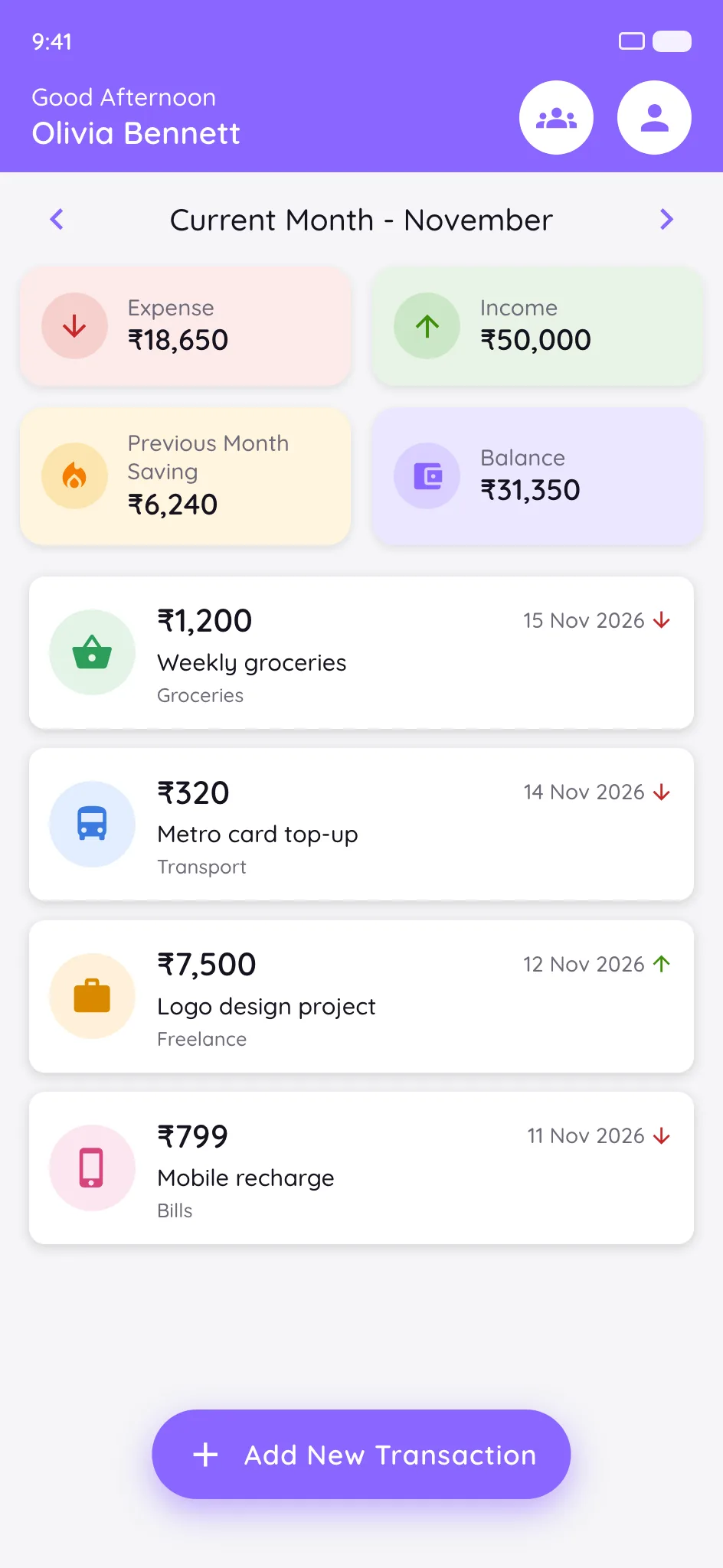
- When you receive pocket money, a stipend or a part-time payment, record it as income.
- After each UPI or cash payment, record the amount under a simple category such as food, travel, college, shopping or other.
- Check your income, expenses and remaining amount once a week, not only when the month is almost over.
- At month-end, review which categories cost more than expected and use those totals for next month's pocket money calculation.
You can follow this process in a notebook or spreadsheet. If you prefer an Android expense tracker, Treasure lets you record income and expenses by category and review spending in reports. See the Treasure setup guide to get started.

For the broader daily habit, read how to manage pocket money as a student. For a tool-selection checklist, see expense tracker app for students in India. Once your amount is fixed, see three example monthly budgets for college students for how to divide it, or fill in the student budget template.
What to do when your pocket money runs out before month-end
First, identify the gap: how much money is left, how many days remain, and which bills you still need to pay. Then prioritize essentials.
- Reduce one flexible category. Delivery food or frequent outings may be easier to adjust than commuting or required academic supplies.
- Discuss direct payment of an essential cost. For example, a parent might pay a monthly bus pass directly instead of including the pass in the allowance.
- Include genuine additional income. Tutoring, a stipend or part-time work can be recorded separately—but do not assume every student has time for paid work alongside college.
- Avoid relying on debt for routine needs. If essential costs exceed what you receive, have a practical budget discussion rather than covering the gap with repeated borrowing.
To understand repeated small expenses, see how to know where your money goes each month.
How to ask your parents for a realistic pocket money amount
Instead of saying "everyone else gets more," bring a simple table with your actual monthly spending:
Essential monthly costs + flexible spending + occasional-cost provision + agreed buffer = the amount you need.
Show which expenses your parents already cover directly, where you can reduce optional spending, and whether last month's unexpected costs were one-time or recurring. A shared set of numbers makes the discussion clearer.
Mistakes to avoid when setting a student pocket money budget
- Copying someone else's number: their city, housing and family arrangements may be different.
- Double-counting rent or college fees: do not include payments handled directly by your parents.
- Ignoring small UPI transactions: many purchases may not feel large individually, but still matter in the monthly total.
- Leaving out a buffer: a small unplanned expense can break an otherwise tight plan.
- Never revisiting your number: semester changes, a new commute or different accommodation can change your costs.
Final takeaway: calculate your own number, then track it
The right pocket money amount is the amount needed for your own monthly expenses, with reasonable room for uneven costs. Start with your actual obligations rather than a friend's allowance. If your example expenses total ₹4,900, a 15% buffer gives ₹5,635—not a magic national average, just a transparent calculation.
To understand your real expenses, log your pocket money as income and your daily payments as expenses. You can do this in Treasure, a free Android expense tracker, and use its reports to review your budget each month.
Frequently asked questions
Is there a standard monthly pocket money amount for college students in India?
No. A student living at home, in a hostel, or in a PG has different costs. Add only the expenses you personally pay each month, then include a suitable buffer.
Is ₹5,000 per month enough for a college student?
It can be enough when rent, tuition and most meals are paid separately, but it may be insufficient when you pay for groceries, travel and other essentials. Calculate your own costs before choosing an amount.
Should hostel rent and college fees be part of pocket money?
Include them only if you pay them from the pocket money you receive. If your parents pay the institution or landlord directly, leave those payments out of your personal monthly calculation.
How much buffer should a student add to a monthly budget?
A 10–20% buffer can be a practical planning starting point, not a universal rule. Adjust it for irregular travel, medical needs, semester purchases and your family's circumstances.
How can I explain a pocket money increase to my parents?
Track your expenses for a month and show a short category-wise table separating essential costs, optional spending and any amount already paid directly by your family.