Pocket money ·
Weekly Budget for Students: Stop Running Out by the 20th
Money gone by the 20th? A weekly budget for students: split flexible money by week, check once every seven days, and reset the limit after a bad week.
By Weps Technology
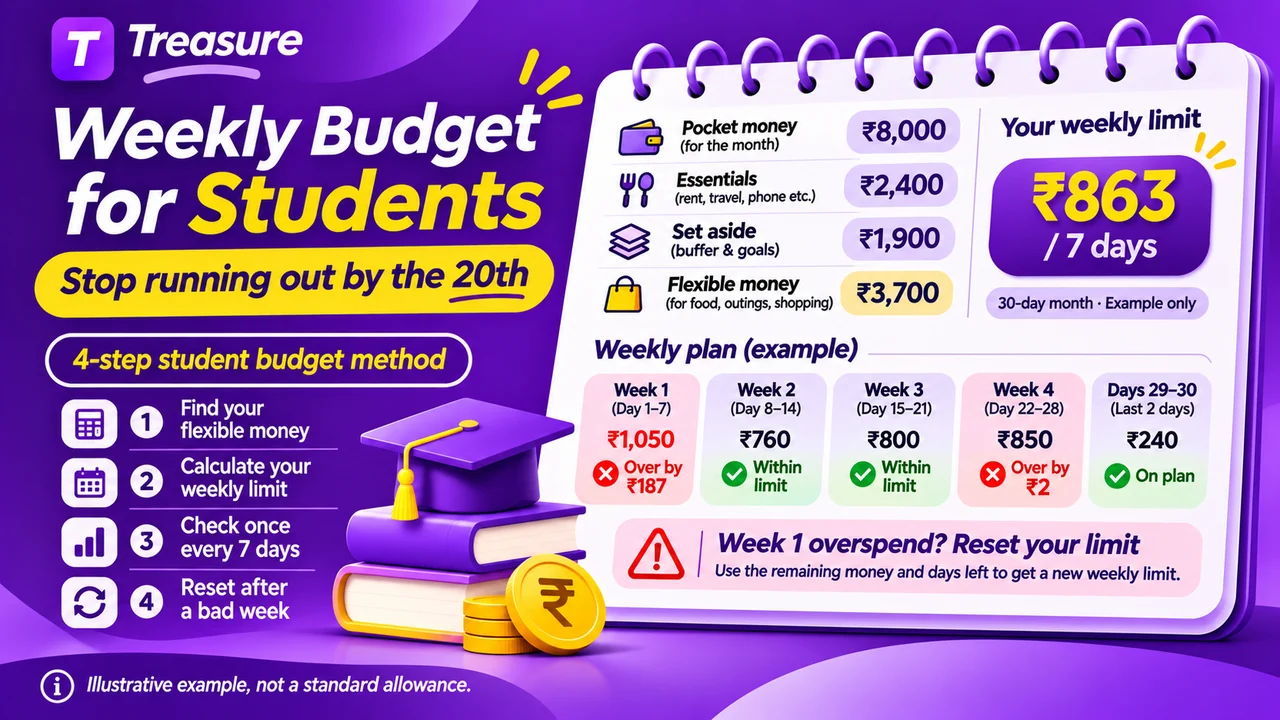
Quick answer: If your money is gone by the 20th, stop budgeting by the month and start budgeting by the week. Work out your flexible money for the month, split it into a limit for each week, and check it once every seven days. If one week goes over, reset the limit for the weeks that are left instead of giving up on the plan.
This guide is for students who get pocket money or a stipend once a month. Every figure in it is a made-up example to show the arithmetic, not a typical or recommended amount.
Why the money runs out by the 20th
A monthly amount gives you one number and thirty days to forget about it. Three things usually happen:
- The first week feels rich. ₹8,000 on the 1st looks like plenty, so the biggest spending happens early.
- Small payments do not feel like spending. A tea here and a delivery there never look like a decision, but they add up.
- There is no warning. You find out on the 20th, when the only fix left is to borrow or ask at home.
A weekly limit changes the third point. You get a small warning in week 1, when you can still do something about it.
The weekly method in 4 steps
1. Find your flexible money
Flexible money = money received − essentials you pay − money set aside
Essentials are the things you must pay: rent you pay yourself, travel, phone, study material. Money set aside covers occasional costs and a small buffer. What is left is the money you can choose how to spend. If you have not worked out these numbers yet, see how much pocket money a college student needs and the three example monthly budgets.
2. Turn it into a weekly limit
Weekly limit = flexible money × 7 ÷ days in the month
A month is four full weeks plus zero to three extra days. Those extra days get a smaller limit: whatever is left after four weeks. If your money arrives on another date, count the days until the next payment instead of the days in the month.
If your flexible money comes out as zero or negative, a weekly limit will not fix it; the essentials or the monthly amount need a second look first.
3. Check once a week
Pick one fixed day, for example Sunday evening. Add up what you spent from your flexible money in the last seven days and compare it with the limit. It takes a few minutes if you have recorded your payments, and a lot longer if you are scrolling through UPI history trying to remember.
4. Reset after a bad week
If you went over, do not "make it up somehow". Recalculate:
New weekly limit = flexible money left × 7 ÷ days left
This spreads the damage across the remaining weeks instead of leaving it all for the last one.
Worked example: ₹3,700 of flexible money in a 30-day month
Take the made-up ₹8,000 hostel budget from the earlier guide: ₹2,400 of essentials and ₹1,900 set aside leave ₹3,700 of flexible money.
Starting limit: ₹3,700 × 7 ÷ 30 = ₹863 a week, and ₹248 for the last two days.
Now suppose the first week goes badly.
| Period | Limit for the period | Spent (example) | Flexible money left | Days left |
|---|---|---|---|---|
| Week 1 (days 1 to 7) | ₹863 | ₹1,050 | ₹2,650 | 23 |
| Week 2 (days 8 to 14) | ₹807 | ₹760 | ₹1,890 | 16 |
| Week 3 (days 15 to 21) | ₹827 | ₹800 | ₹1,090 | 9 |
| Week 4 (days 22 to 28) | ₹848 | ₹850 | ₹240 | 2 |
| Days 29 and 30 | ₹240 |
Week 1 went over by ₹187. After the reset, the limit for week 2 is ₹2,650 × 7 ÷ 23 = ₹807, which is ₹56 less than the original ₹863. The overspend is spread over the days that are left instead of emptying the last week. Each later limit is worked out fresh from the money and days left, so it moves with what you actually spend: ₹827 for week 3 and ₹848 for week 4 here. Week 4 goes over its limit by ₹2, which leaves ₹240 for the last two days.
Why ₹863 and not ₹854? The monthly budget guide shows ₹854 for the same example. That is an average week across a year (₹3,700 × 12 ÷ 52). ₹863 is seven days of this particular 30-day month. For splitting an actual month, use the days-based figure.
Without the weekly check, the same student would most likely have noticed the problem around the 20th, with far less room to adjust.
Already short this month? A catch-up plan
If the money is nearly gone today, the weekly method cannot bring it back, but it can get you to the end of the month in order.
- Count what is left, in your account and in cash.
- Count the days until your next money arrives.
- Divide to get a daily amount.
- Pay essentials first, such as travel to college and food.
- Pause what can wait until next month.
Example: at the end of day 20 of a 30-day month you have ₹600 of flexible money left, and ten days to go. That is ₹600 ÷ 10 = ₹60 a day, or ₹420 for the next seven days and ₹180 for the last three.
If even essentials do not fit, that is a conversation to have at home about the amount, not a gap to cover with repeated borrowing. Then start the weekly limits from day 1 of the next month.
A weekly budget checklist
| When | What to do |
|---|---|
| Day 1 | Work out flexible money and the weekly limit |
| Every payment | Record the amount, or at least keep it findable |
| Once a week | Add up flexible spending and compare with the limit |
| After an over-limit week | Reset the limit from the money and days left |
| After day 28 | Spend only what is left for the extra days |
| Month-end | Note what went differently and adjust next month's plan |
Do not count essentials in the weekly total, and do not treat money set aside as spending money. If you buy essential food or groceries week by week, keep a separate weekly amount for them inside essentials, apart from the flexible limit.
Tools: paper, a sheet or an app
Any of these works as long as you actually open it once a week.
- Paper or a notes app. Write the weekly limit at the top and subtract as you go.
- A spreadsheet. The free student budget template has a Weekly check sheet that splits flexible money by the number of days in the month. It shows the starting limits; the reset after a bad week is a calculation you do yourself.
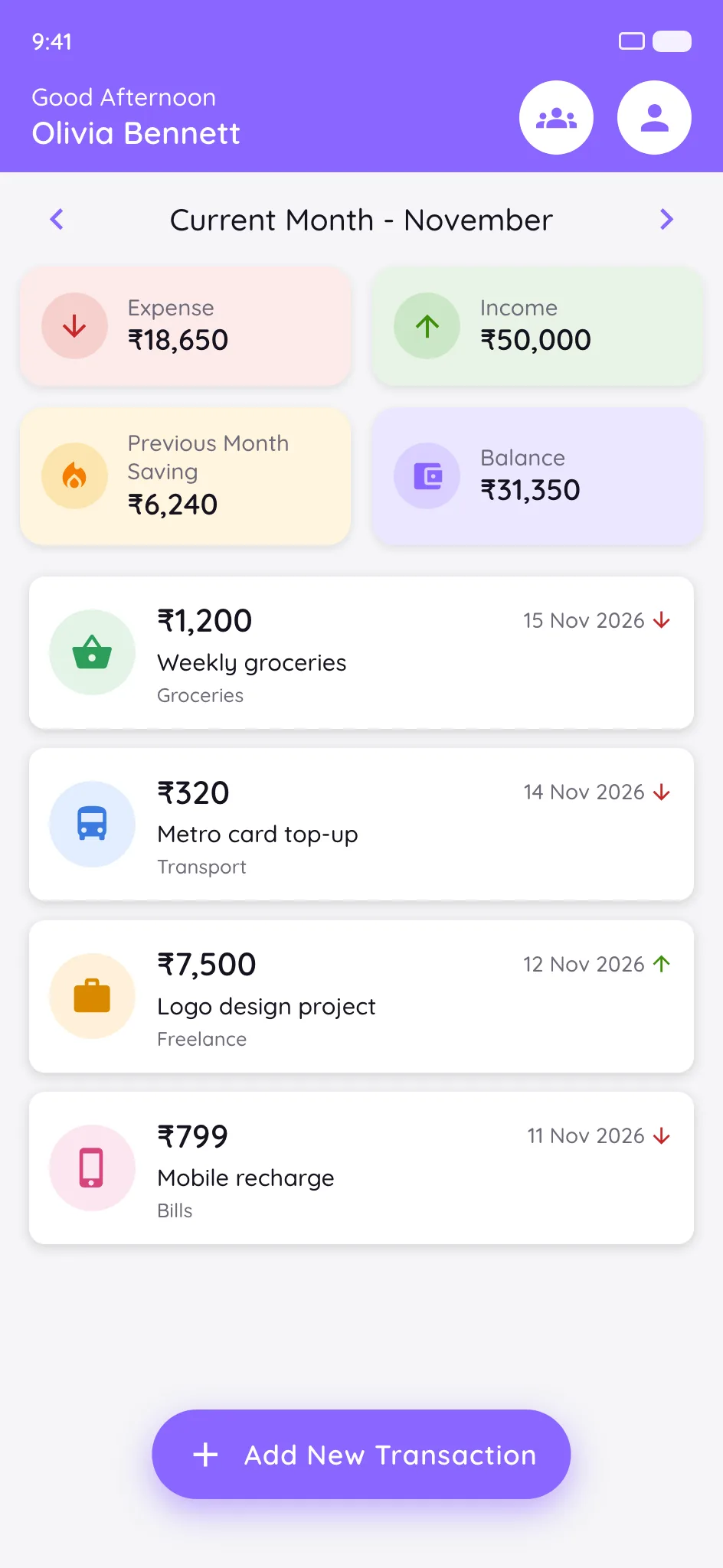
- An expense tracker app. Treasure is an Android app that records income and expenses under categories and shows category totals in its reports. It does not set a weekly limit or warn you when you cross one. You record payments as you make them, then compare the week's total with your limit yourself. The setup guide shows how to add a transaction.
For the day-to-day habit that goes with this, see how to manage pocket money as a student.
Common mistakes with a weekly budget
- Splitting the whole pocket money by week. Split only the flexible part; essentials are monthly.
- Giving the extra days a full week's limit. Days 29 to 31 get what is left, not another full week.
- Carrying an underspent week into a splurge. Leftover money is next week's room, or next month's buffer.
- Skipping the check after a bad week. That is the week the check matters most.
- Borrowing from next month in your head. It makes next month start short.
Final takeaway
A month is too long to notice a problem in time; a week is not. Work out your flexible money, turn it into a weekly limit, check it on a fixed day, and reset the limit when a week goes over. The goal is not to spend less on everything. It is to reach the last week without a surprise.
To record payments on your phone during the week, you can use Treasure on Google Play.
This guide is general education about budgeting, not financial advice. All amounts are made-up examples.
Frequently asked questions
How do I make a weekly budget as a student?
Take the money you receive for the month, subtract the essentials you pay and the amount you set aside, and you get your flexible money. Multiply that by 7 and divide by the number of days in the month. That is your limit for one week of food outside, outings and small shopping.
Why does my money run out before the month ends?
Usually because the whole month's money looks large in the first week, so spending is highest then. A monthly total gives no warning until it is nearly gone. A weekly limit gives you four or five small checkpoints instead of one late surprise.
What should I do if I overspend in one week?
Do not drop the plan. Take the flexible money you still have, divide it by the days left in the month and multiply by 7. That is your new weekly limit. One bad week then costs a little every week, instead of emptying the last week.
My money is already almost gone. What now?
Count what is left and the days until your next money arrives, and divide one by the other to get a daily amount. Pay for essentials first, pause what can wait, and avoid borrowing for routine spending. Then set up weekly limits from the first day of the next month.
Should rent, mess fees and groceries be part of the weekly limit?
Keep rent, prepaid mess fees and a bus pass in your monthly essentials, not in the weekly limit. If you buy essential food or groceries every week, give them their own weekly amount inside essentials first. The weekly limit in this guide is only for flexible money, the part you can choose how to spend.
Why is the weekly figure here different from the ₹854 in the monthly budget guide?
Both come from the same ₹3,700 example. ₹854 is an average week across a year, worked out as ₹3,700 × 12 ÷ 52. ₹863 is seven days of a 30-day month, worked out as ₹3,700 × 7 ÷ 30. Use the second one when you are splitting an actual month.
Can Treasure set a weekly spending limit for me?
No. Treasure records income and expenses and shows category totals in its reports. You compare the week's spending with your own limit yourself.